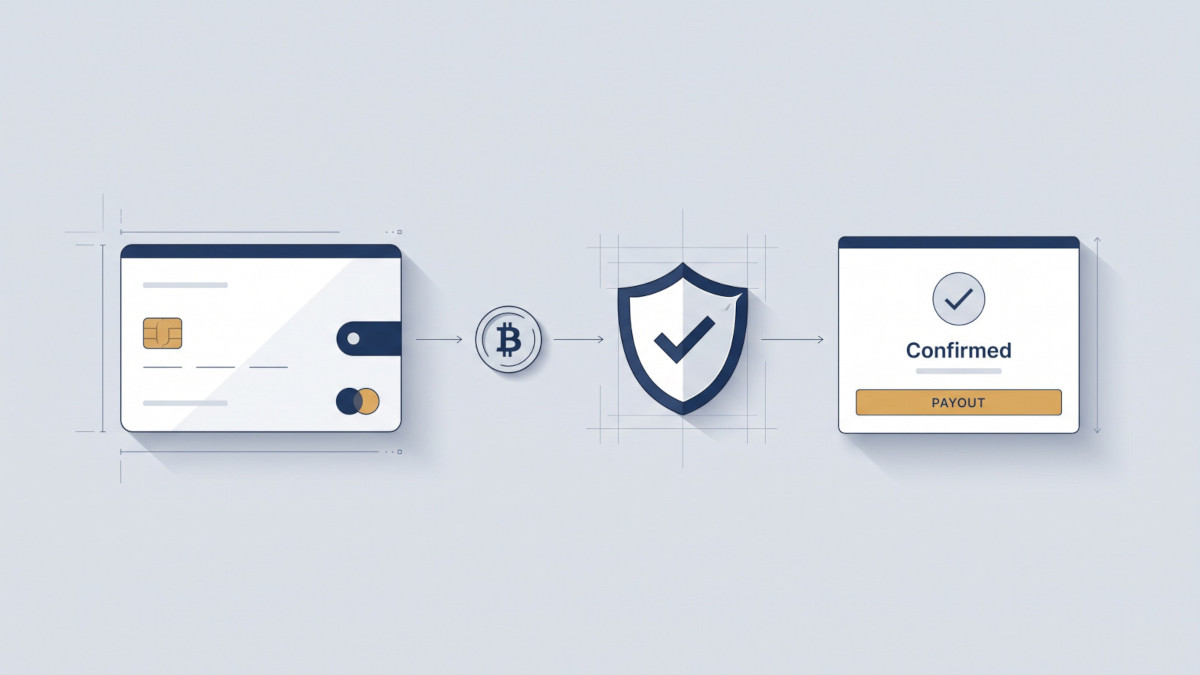
Selling cryptocurrency for the first time can feel more complicated than buying it. There is a market price to check, a network to choose, fees to understand, and payout details to enter. Most costly mistakes, however, come from the same source: moving too quickly.
This practical guide walks through the checks worth making before you confirm a sale. It is written for beginners, but the routine is useful for anyone who wants a safer, more predictable transaction.
The short version: verify the platform, compare the final payout rather than the headline rate, double-check every address, and keep a record of the transaction.
1. Know what “selling crypto” actually means
A crypto sale usually follows one of two paths. You may trade one digital asset for another, such as BTC for USDT, or sell an asset for traditional currency and withdraw the proceeds through an available payment method. The steps, timing, and fees can differ significantly.
Before starting, answer three simple questions:
- What are you selling? Confirm the asset and the exact amount.
- What do you want to receive? Another cryptocurrency, a stablecoin, or a fiat payout?
- Where should the proceeds go? Your platform balance, crypto wallet, bank account, or another supported payout method?
Having those answers ready prevents you from making important decisions halfway through a transaction.
2. Compare the final amount, not only the quoted price
The largest number on the screen is not always the amount you will receive. A transaction may include a trading fee, withdrawal fee, payment-processing fee, or a difference between the quoted market price and the executed price.
Review the complete transaction summary and compare:
- the exchange rate or quoted sale price;
- all platform and network fees;
- the minimum and maximum transaction limits;
- the estimated processing time;
- the final amount you are expected to receive.
If the final payout is unclear, pause. A trustworthy transaction flow should show the important costs before you confirm.
3. Verify the destination and the network
Crypto transactions are generally irreversible. If you send funds to an incompatible address or select the wrong network, recovery may be difficult or impossible.
Check that the receiving platform supports both the asset and the selected network. Compare the destination address character by character, paying particular attention to the beginning and end. If a memo, tag, or payment reference is required, include it exactly as shown.
For a new destination or a larger transfer, consider sending a small test amount first. You may pay an additional network fee, but that cost can be worthwhile when it confirms that your setup is correct.
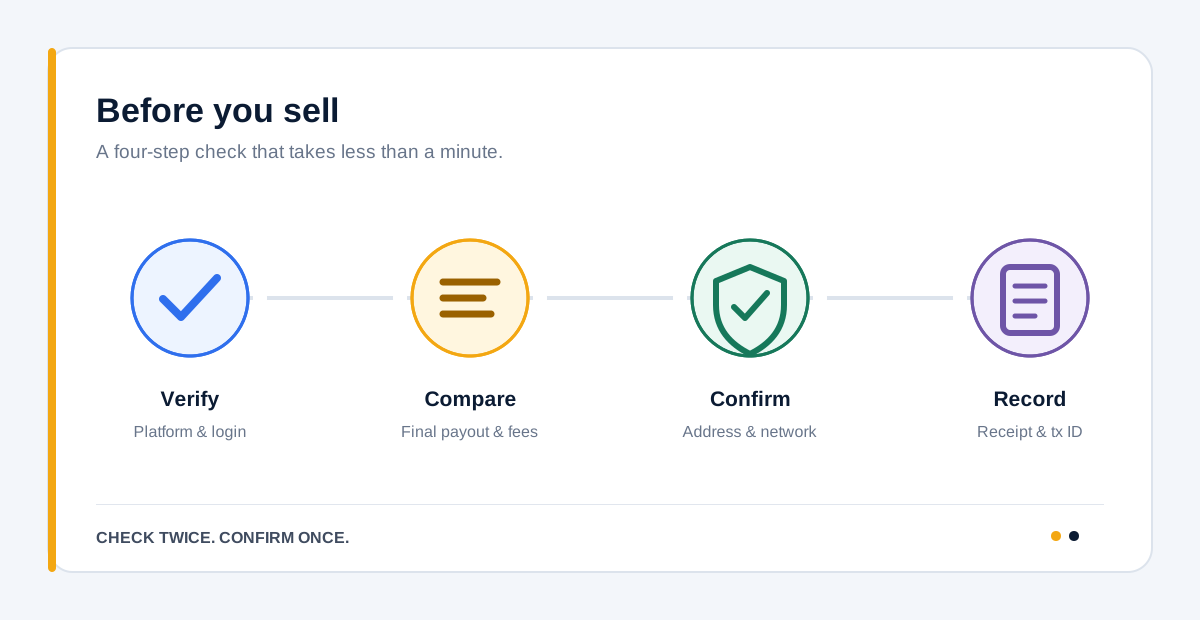
A reusable pre-sale checklist. Save it for your next transaction.
4. Protect your account before money moves
Security should happen before the sale, not after something looks suspicious. Use a unique password and enable two-factor authentication where available. An authenticator app or hardware security key is generally safer than relying only on text messages.
Always open the platform from a trusted bookmark or by typing the address yourself. Lookalike websites and urgent messages are common phishing tactics. No legitimate support agent needs your password, two-factor code, wallet recovery phrase, or private key.
If someone pressures you to act immediately, share a security code, or move the conversation to a private messaging app, stop the transaction and contact support through the platform’s official website.
5. Review the transaction one final time
Before pressing the confirmation button, read the summary from top to bottom. This takes less than a minute and can prevent an expensive mistake.
- Confirm the asset and amount being sold.
- Check the rate, every fee, and the final payout.
- Verify the destination, network, and any required memo or reference.
- Check the estimated completion time and transaction limits.
- Make sure you are using your own secure device and connection.
Some prices are available only for a short quote window. That timer is not a reason to skip verification. If the quote expires, request a new one and review it again.
6. Save the receipt and keep useful records
After confirming the sale, save the transaction ID, date, asset amount, exchange rate, fees, and payout amount. If funds moved on-chain, keep the blockchain transaction hash as well.
These details make it easier to track a delayed payout, calculate your actual result, and prepare any financial or tax records required in your country. Rules vary by jurisdiction, so consult a qualified local professional when you need advice about your specific situation.
A repeatable routine is your best safety tool
Selling cryptocurrency safely is less about predicting the perfect price and more about following a reliable process. Verify where you are, understand what you will receive, check where the funds are going, and keep evidence of what happened.
With Bubobux, you can review your account balance and recent activity before starting your next transaction. When you are ready, open the selling flow, review the live terms carefully, and confirm only when every detail is correct.
Disclaimer: This article is for general educational purposes only. It does not constitute financial, investment, legal, security, or tax advice. Cryptocurrency prices are volatile, and transactions may involve a risk of loss.

Comments 0
Log in to join the conversation.
Log inStart the conversation.